Plant-based food is still widely thought of as a vegan thing. Who actually buys it tells a broader story. GFI Europe, drawing on Kantar's GB grocery panel, has called plant-based an everyday part of the UK food system, with around a quarter of people buying plant-based more than once a year. And that's despite YouGov putting vegans at just 2 to 3% of British adults.
Look at how the country actually eats: roughly 6 in 10 adults are meat-eating omnivores, about a third are flexitarians, and only a small slice are vegetarian or vegan.
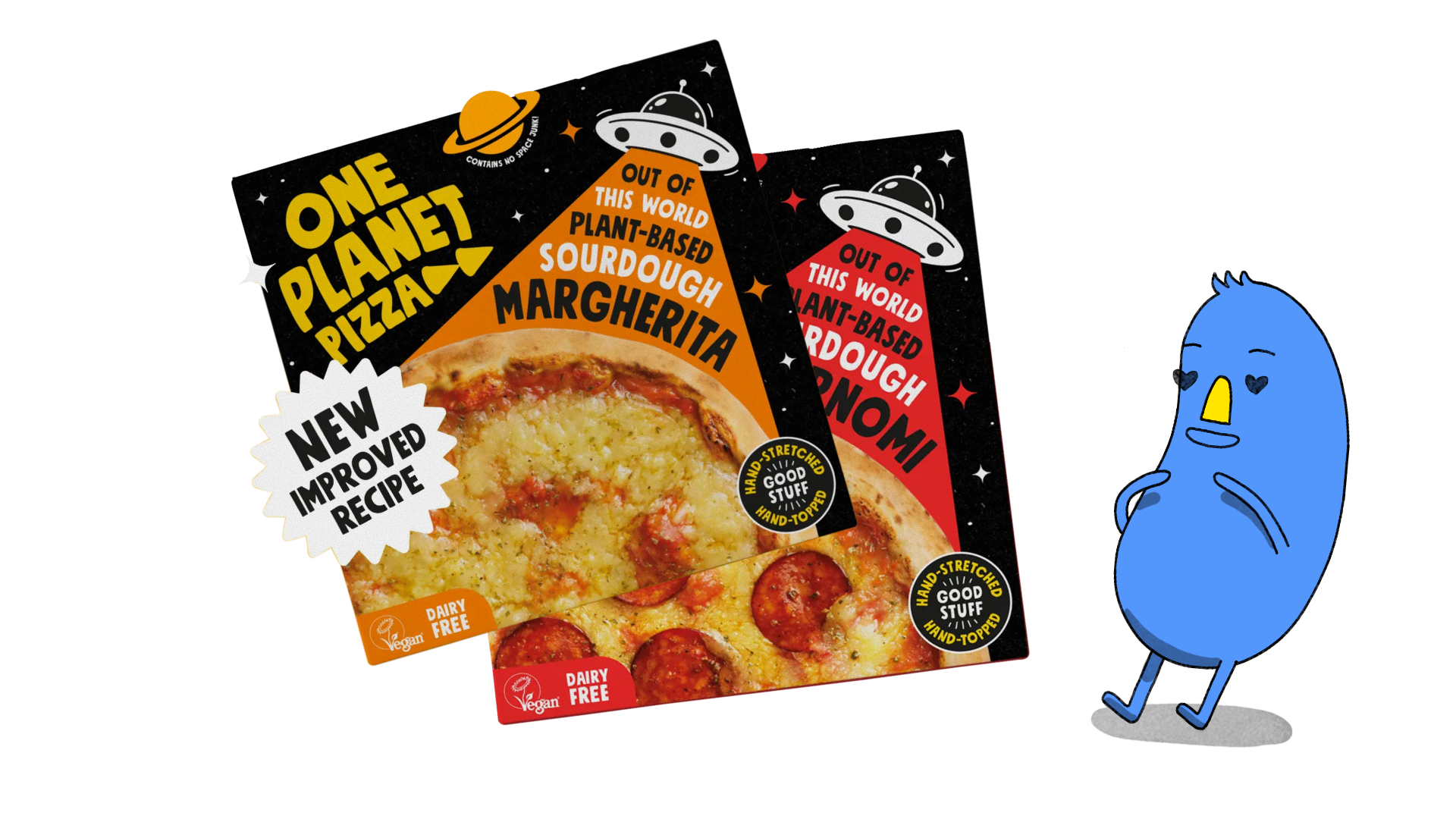
The team at One Planet Pizza suspected the same was true of their own shoppers. They didn't think it was only vegetarians reaching for their plant-based range, and they wanted to see how broad the appeal really was.
So we put it to the test. We didn't target vegetarians, or screen anyone by diet. We simply showed the plant-based range to people who regularly buy frozen pizza, and asked what they made of it, alongside an established competitor.
Then we looked at who we'd actually spoken to. The mix of eaters in our sample mirrored the national picture almost exactly. Which makes what came next more interesting.
61% of people rated the range appealing. 6 in 10 (60%) said it felt genuinely unique next to what's already on their shelves. And more than 4 in 10 (43%) said they'd be likely to buy it. Solid scores for asking people to try something that may be outside their comfort zone.
Asked which they'd actually buy, 62% chose One Planet over the established competitor. A challenger brand, out in front of a name people already knew.
But the appeal numbers aren't the interesting part. The reasons behind them are.
When we asked what drew them to the range, only 8% mentioned anything about it being plant-based, dairy-free or vegan. Just 8%. Everyone else went straight to how it looked and how it sounded to eat.
The word that came up most? Sourdough. Followed closely by the packaging, and a steady run of "tasty", "fun" and "quality".
A few, in their own words:
Even the people who did clock the plant-based angle mostly folded it into an appetite point. One summed it up nicely: "I enjoy pepperoni, so I would be interested in trying a plant based version."
And remember, these weren't plant-based diehards. They were regular frozen pizza buyers, the people who actually shop that freezer aisle.
You might expect the plant-based credential to be the draw. Here it barely registered. Craft cues did more of the persuading than the label itself: a sourdough base, appetising packaging, a proper-looking slice.
We're not the only ones seeing it. GFI Europe's most recent analysis points to taste and price, not ethics, as what actually moves plant-based shoppers now. What it could mean is that "plant-based" is starting to behave less like a selling point and more like the norm. Shoppers aren't weighing it up. They're skipping past it, straight to "does this look like a good pizza?"
Want to know what's really driving your appeal?
The gap between what people rate and why they rate it is where the useful stuff lives. A quick concept test surfaces both in a couple of days, in the words of real shoppers. That's the bit we love.


.png)