As marketers, we're all drilled on the importance of distinctive brand assets. We can recite the toolkit in our sleep: your USPs, your four Ps, your reach and frequencies. They're a tried and true part of the kit, the stuff that gets nodded through in every strategy deck.
And yet, somewhere between the fifth rebrand pitch and the shiny new campaign idea, we get bored. We tinker. We convince ourselves the thing that's working needs freshening up, and quietly walk away from the core principles that build real connections with the people we're trying to reach.
Byron Sharp and the Ehrenberg-Bass Institute have spent years making the unglamorous case for holding your nerve. Their argument, boiled down: brands grow through mental availability, the likelihood that you pop into someone's head in a buying moment, and distinctive assets (your logo, colours, characters, taglines) are the memory cues that get you there. The test of a good asset is simple. Show it with the brand name stripped away, and see how many people still know who it belongs to. Jenni Romaniuk calls this Fame. Do that consistently, resist the urge to fiddle, and the asset does the heavy lifting for you.
Which brings us to Pip & Nut.
Pip & Nut were recently crowned champions of Brand of the Match on The Marketing Hustle podcast, singled out for a genuinely brilliant out-of-home campaign. We were lucky enough to partner with The Marketing Hustle on it, and getting stuck into that kind of conversation is exactly our idea of a good time. So we thought Pip & Nut deserved both a round of applause and a bit of testing to reinforce just how much doubling down on your brand assets can pay off.
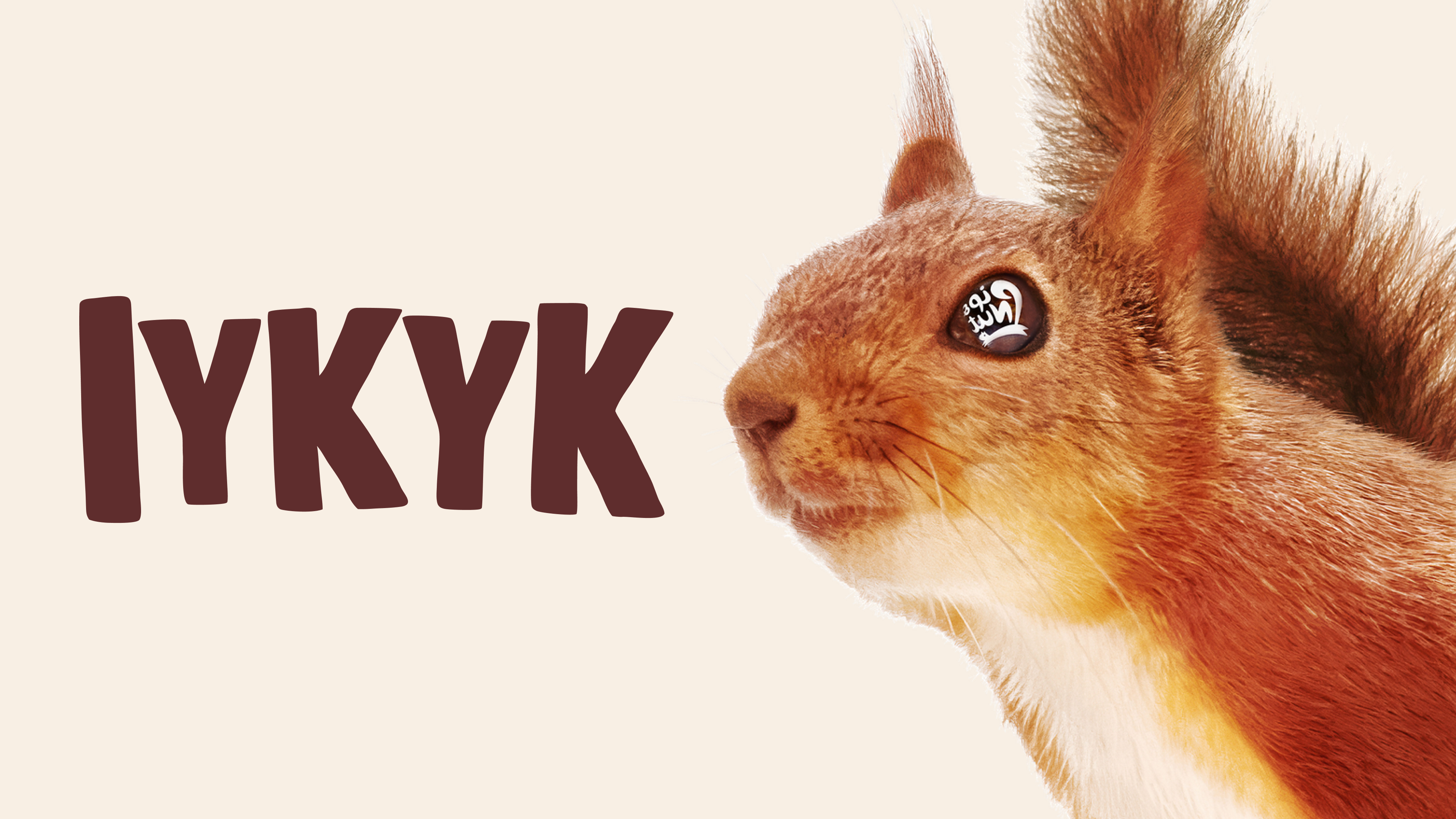
We took Pip & Nut's recent out-of-home campaign and stripped it right back. Out went the product. Out went the logo. Out went the brand name. What was left was the humour, the copy and the icon Pip & Nut have leaned into for years: the squirrel.
Then we put it in front of UK consumers to see how hard those icons were really working. Would people remember the ad? Could they name who it was for with every branding cue removed? And, most interestingly, were the assets strong enough that even people who had never seen the campaign could piece it together from the squirrel and the joke alone?
.png)
Here's what came back.
Results are based on a survey of 200 UK adults aged 18 to 54, split evenly by gender and across two age bands (18 to 34 and 35 to 54), all of whom had purchased peanut butter in the last three months. Every respondent saw the campaign with the Pip & Nut name, logo and product removed, leaving only the squirrel and the copy.
Asked which element more instantly says Pip & Nut, 66% chose the squirrel over the copy and humour (34%), a significant distance. That preference held steady across the sample with no meaningful age or gender split. That itself is worth finding out for an asset you want working on everyone. In their own words, respondents put it plainly: "the squirrel is very clearly pip & nut" and "the squirrel is well known for pip and nut".
Shown the ad, 53% correctly placed it in the peanut or nut butter category. Asked the follow-up of which brand it was for, 46% correctly named Pip & Nut with no name, logo or product on show.
The more interesting cut sits underneath that. 54% said they had never seen the advertising before, and among that group 41% still arrived at Pip & Nut, compared with 53% of those who had seen it. That points to a large share of correct attribution coming from the icons doing their job, not from memory of the campaign.
The creative scored strongly on the distinctiveness measures. 82% rated it unique (rating 4 or 5 out of 5), 78% found it eye-catching, 76% liked it, and 68% felt it fit a brand they would buy from. In the open-ends people reached for "eye catching", "fun", "unique and appealing", and "Modern and bold. Playful and fun."
But the same animal that makes the squirrel memorable also pointed a minority in the wrong direction. Pet food was the second most common category guess at 21%, behind peanut or nut butter at 53%. And those who read it as pet food were less likely to name the brand correctly (38%) than those who read it as peanut or nut butter (54%).
A handful spelled out the animal-first reading: "The squirrel shows it is meant for animals", "showing the kind of animal we can use the pet food for". With the product absent from the frame, the wildlife cue that anchors the brand for most can, for some, cue the wrong aisle entirely.
None of this is an argument for standing still. It's an argument for knowing what your assets are worth before you touch them. Pip & Nut have spent years consistently putting one characterful squirrel front and centre, and the payoff is an icon that can carry a whole campaign with the logo, the name and even the product taken away, and still bring nearly half the room home. That's Fame you can bank, and it's exactly the kind of memory structure Sharp and Romaniuk keep telling us to protect.
So consider this our applause for Pip & Nut, and a small nudge for the rest of us. Before you get bored of the thing that's working, it might be worth finding out how hard it's actually working first. Turns out one very committed squirrel can do a lot of the heavy lifting.
Curious how hard your own brand assets are working? That is exactly the kind of question Stickybeak is built for: fast feedback from real consumers, minus the guesswork. If you fancy putting yours to the test, we would love to help you set it up.


.png)