Walk down a UK supermarket aisle in 2026 and the shift is obvious. Gochujang sits beside the ketchup. Kimchi has a permanent shelf. Matcha is in the lattes, the cookies and the protein balls, and functional fizz (kombucha, apple cider vinegar, wellness shots) has taken over the chiller. Waitrose has gone as far as calling Korean cuisine mainstream, with gochujang, sriracha and kimchi now pantry staples rather than specialist buys.
It's a good-news story about curiosity. British shoppers want bolder flavour and more natural, functional ingredients than they did a decade ago. But underneath the boom sits a quieter, more interesting tension, and it's one every food and drink brand should be paying attention to.
Most people buying into these trends have never tasted the authentic version of what they're chasing. Matcha is the clearest example. The Global Japanese Tea Association has described the current squeeze as the first matcha shortage in its history, as demand from markets like the UK outpaces the supply of tencha, the shade-grown leaf real matcha is made from.
As genuine supply tightens, lower-grade powder, sometimes cut with ordinary green tea, is increasingly sold as the real thing. The result is a category where "matcha" often describes a flavour, not the ingredient.
Kimchi is travelling the same road. Waitrose even has a phrase for it, "unapologetically inauthentic," for the way shoppers happily reinvent Korean food rather than seek out the original. Kimchi-flavoured crisps, sauces and noodles now far outnumber jars of the fermented original.
So we put two questions to consumers: do they think they can spot the real thing, and when it comes to choosing, what do they actually go on?
We partnered with a new kimchi brand, Miss Kim (a traditional Korean kimchi now listed in Selfridges), and tested with 200 UK shoppers aged 25 to 64 who eat Korean-flavoured products at least occasionally. Two findings stood out.
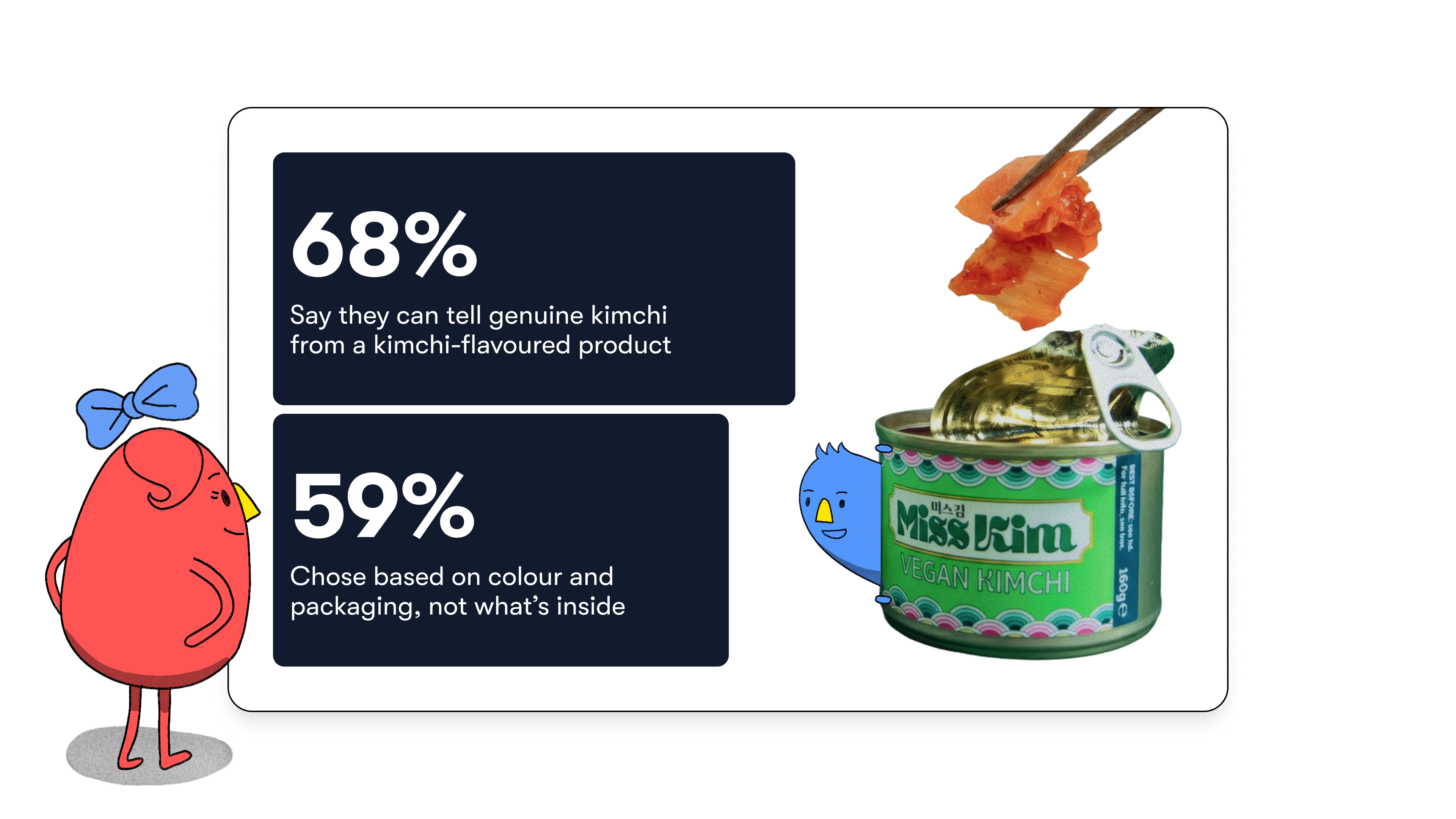
First, confidence is high, but uneven. Just over two-thirds (68%) said they were confident they could tell genuine kimchi from a kimchi-flavoured product. But that confidence sat almost entirely with insiders. It reached 96% among people who had made kimchi themselves and 89% among weekly Korean-food eaters, but fell to 57% among occasional eaters. And this is claimed confidence, not tested ability: believing you can tell real from imitation isn't the same as being able to.
Second, when it came to choosing, authenticity turned out to be something shoppers see rather than taste. Asked to pick between two versions of the same product, Traditional and Stir Fry, the split was a near coin-flip (52% versus 48%). But when we read why people made their decisions, 59% of the reasons came down to colour and packaging, not flavour or what was in the jar.
The verbatims are telling. One group used colour as a shortcut to authenticity and health: green "looks more real to me," "makes it feel more authentic and healthy," "represents freshness." One shopper even reasoned that "green is not for kimchi." The other group wasn't thinking about kimchi at all. They were reaching for whatever jumped off the shelf: "bright pink, love the colour, stands out," "I just preferred the brighter colours," "my favourite colour is green."
What almost nobody mentioned was fermentation, flavour, or how they'd actually eat it. Faced with a product many don't know well, shoppers did what shoppers do: they read the pack and inferred the rest. Authenticity wasn't being called out, or even really judged. It was being guessed, from the outside of the jar.
For brands riding these trends, the takeaway is a positive one. The appetite is real, and worth meeting: three-quarters (75%) found the Miss Kim authentic kimchi appealing, and 63% said they'd buy it. But if shoppers are buying the idea of authenticity more than the experience of it, then the cues on your pack (colour, language, provenance) are doing work the product alone can't. In this test, those cues carried more weight than the recipe itself, which makes them well worth getting right.


.png)