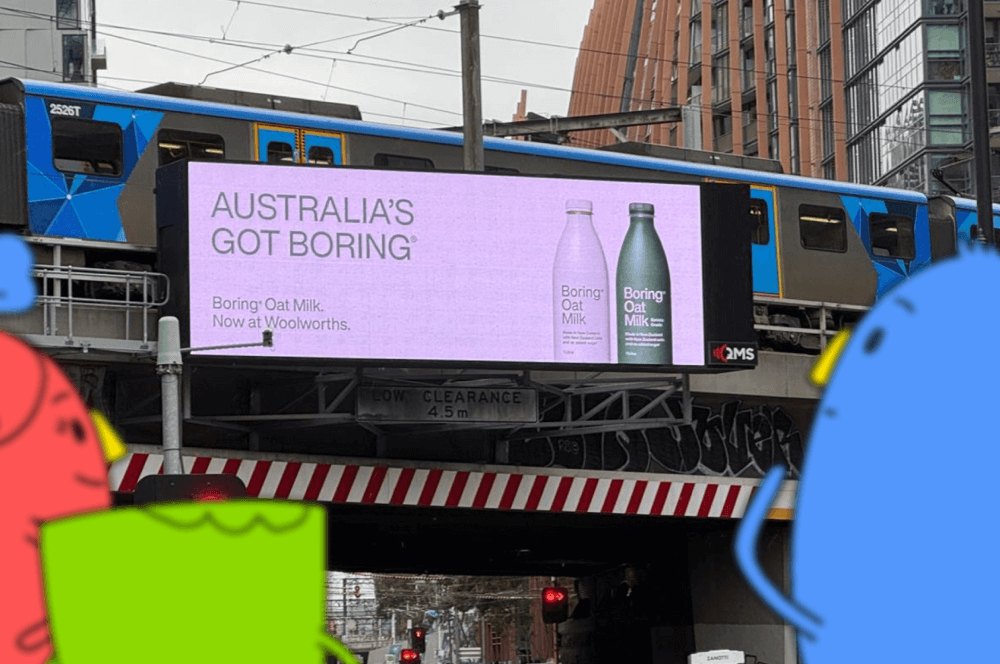

Strong recall across both markets - real people, real exposure, real proof it worked.
The vast majority who remembered the campaign came away more likely to buy.
Landed the right positioning Denada was chasing: adventurous and health-focused, not boring.

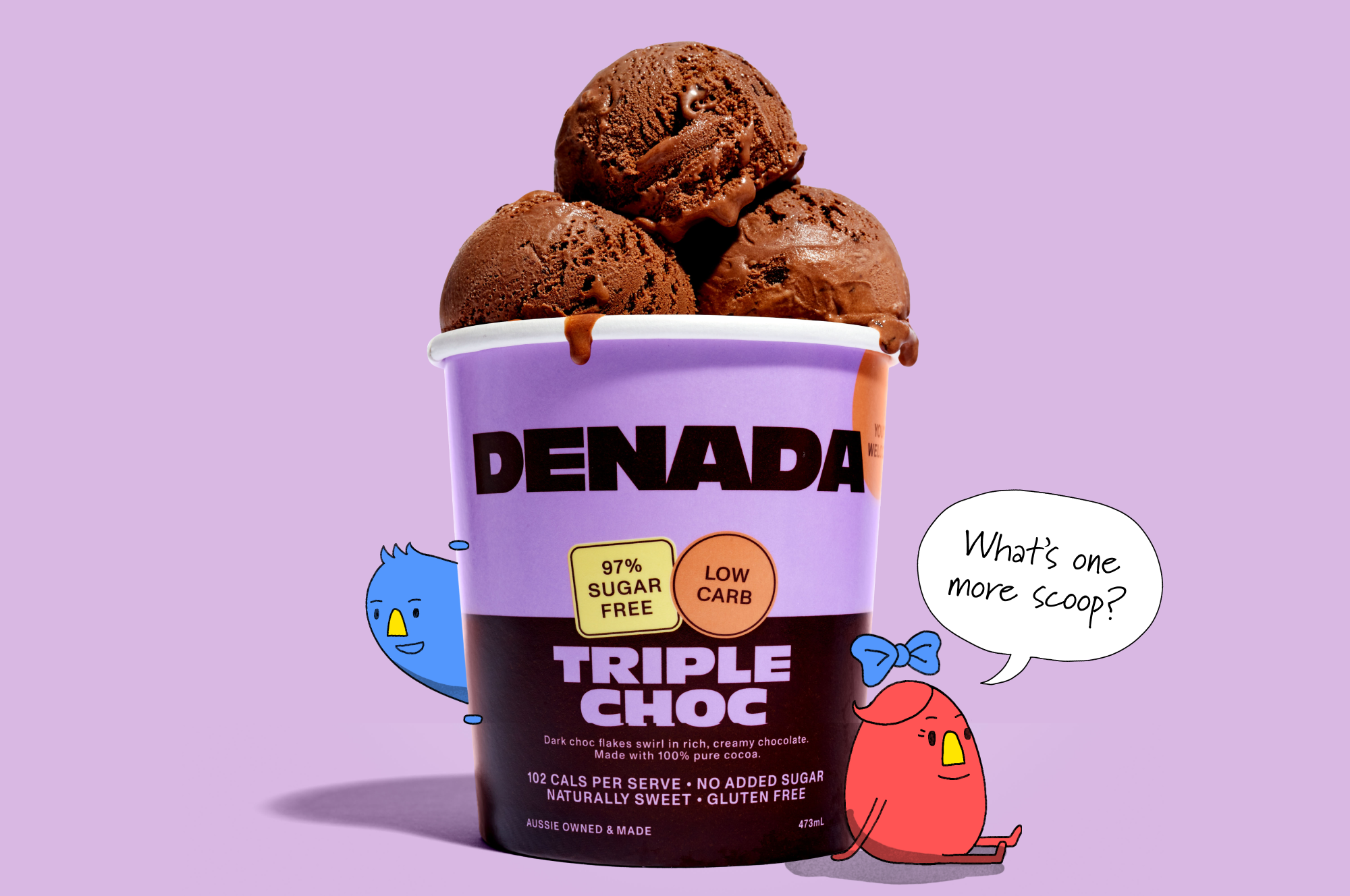
Denada was born in Fremantle, Western Australia, founded by three friends who were tired of being told that looking after yourself meant giving up the good stuff.
Their ice cream, pops and bars - no added sugar, low carb - are stocked in major Australian retailers. The product was always the easy part. The harder job is convincing people that something better-for-you can also be genuinely indulgent, and that's the pressure Denada puts on every piece of marketing it makes.
Once an OOH campaign is live, that's it. You can't A/B test a billboard. You can't swap the headline if it's not landing, or shift spend to the version that's working. You commit, then you wait.
Most brands wait indefinitely. The campaign wraps, everyone moves on to the next thing, and all that's left is a vague sense of whether it worked. That vague sense doesn't hold up in a conversation with a retailer or a board. It doesn't make the next campaign better. And it doesn't tell you whether the money was well spent.
Rather than spread the campaign thin nationally, they made a strategic call: focus on metro Sydney and Melbourne, their highest-performing retail markets, and reinforce purchase intent right at the point of sale. Every dollar had a job to do. Denada wanted more than a feeling that it had worked. They wanted to know.
The question wasn't complicated, but it mattered: had the campaign actually reached people, and had it shifted the way consumers thought about the brand?
Denada ran a post-campaign consideration test with Stickybeak, surveying 400 Australians aged 18–54 across Sydney and Melbourne. To make sure the sample reflected genuine exposure, respondents were qualified by proximity to the CBD, in the inner city and inner suburbs where the campaign had actually run.
The test measured three things: how many people had seen the campaign, how it had changed their likelihood to consider Denada, and which brand attributes they now associated with the work. The goal wasn't just to mark this campaign as a win. It was to bank the lessons and carry them straight into Denada's next campaign, a summer burst already taking shape.
When the results came back, the Denada team got something most brands never get after an OOH campaign: certainty.
Real people, in real suburbs, had seen their work. A significant proportion of central Sydney and Melbourne consumers recalled the campaign, proof the creative had cut through in two of Australia's busiest, most competitive markets rather than blending into the background.
Among those who remembered the ads, the vast majority said it made them more likely to buy Denada. For a brand that most respondents had never heard of before, that's a remarkable shift. Strangers had seen a poster and come away warmer on the brand.
But the result that mattered most wasn't the reach or the consideration lift. It was this: consumers described Denada exactly the way Denada wanted to be described. Adventurous with flavour. Health-focused, but not boring. The framings the team had worked hard to avoid - worthy, dull, better-for-me-but-boring - barely registered.
Denada hadn't just made a campaign that worked. They'd made one that told the right story, backed by proof they could take straight into the next planning conversation.



.png)


.png)